Previewing Catalyst’s New Online Learning Tools for Parents, Educators, and Moderators to help Tackle Violent Misogyny & Extremism Online
Keeping young people safe from potential online harms is critical. That’s why, through its Catalyst programme, the Christchurch Call Foundation (CCF) is leading a project to develop practical solutions to a growing and troubling convergence: the intersection of online violent misogyny, technology facilitated gender-based violence (TFGBV), and violent extremism.
There are few programmes globally that directly address these links between violent misogyny online and violent extremism. Catalyst is changing that.
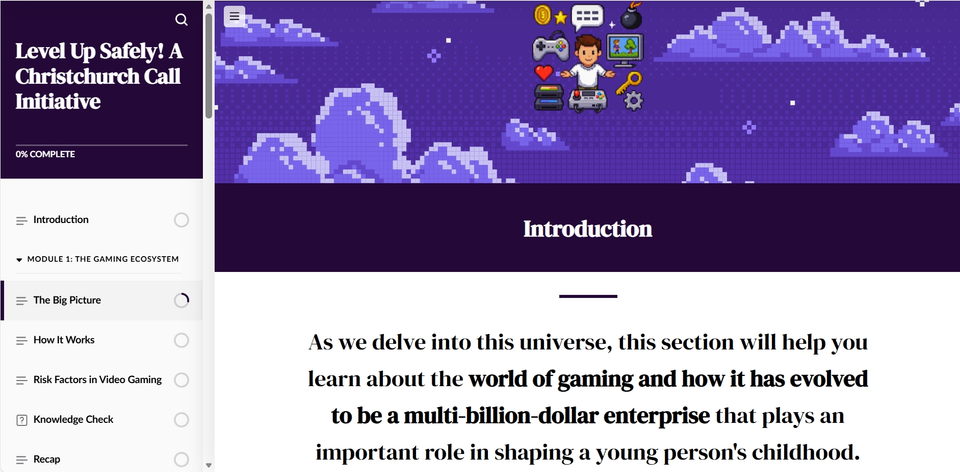
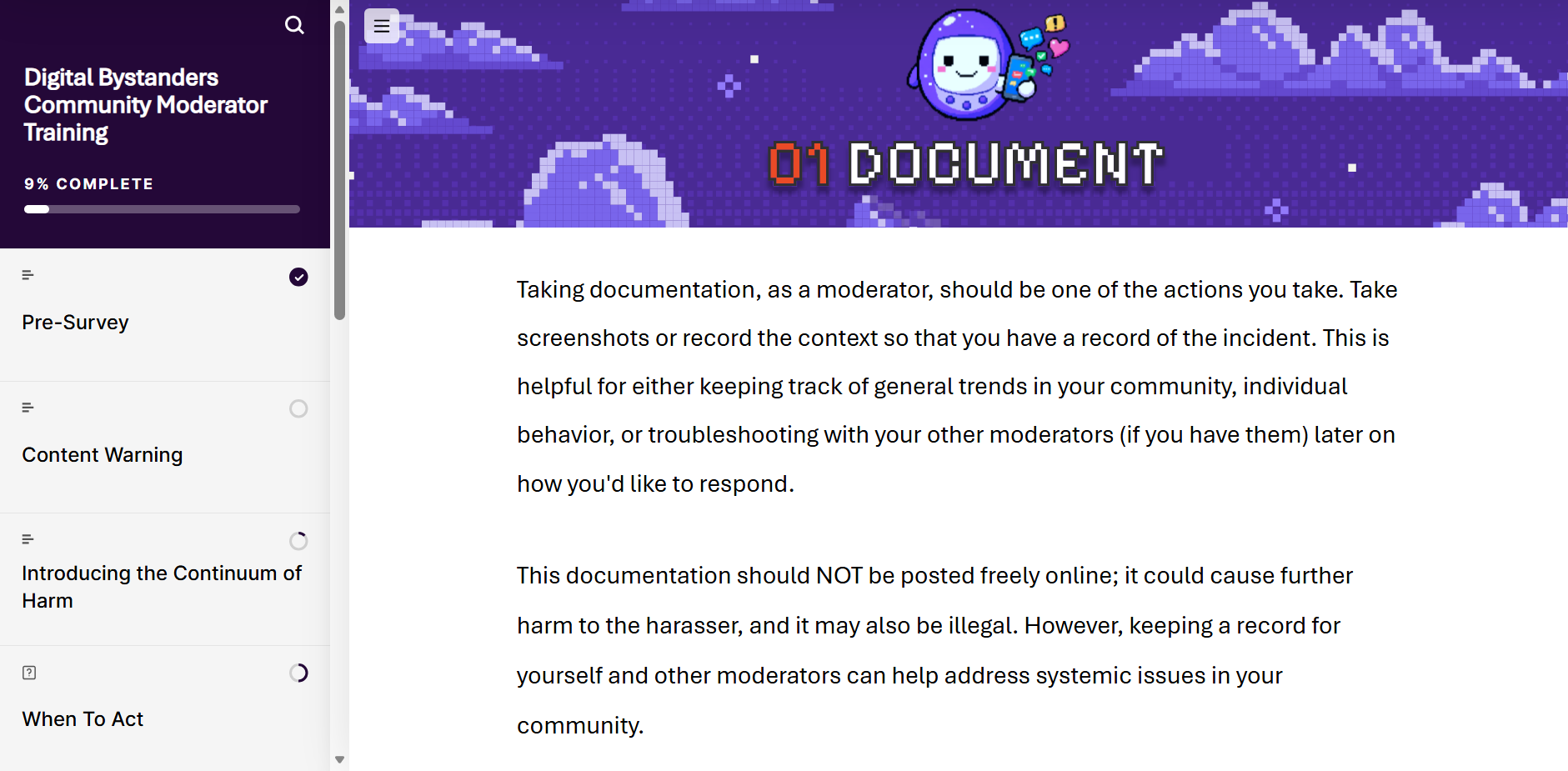
This week the CCF team hosted previews for two important new online learning resources, Level Up Safely! and the Digital Bystanders Community Moderator Trainings.
Each tool is designed to address online harms head-on by providing free, practical online safety training designed to help build safer digital spaces. The courses empower users with skills to recognise, prevent, and respond to online harms and emerging digital threats.
All content will be under Creative Commons licensing, accessible for re-use elsewhere. Forthcoming updates will include additional languages, platform-specific iterations, bespoke support chatbots, and audio content.
Breaking down Catalyst’s Online Learning Tools
Across two in-depth facilitated sessions, our CCF team showcased Catalyst’s two new online learning tools:
Level Up Safely! is designed for caring adults, including parents, educators, social workers, and caregivers. It focuses on understanding and responding to hybrid harms targeting children and young people in online gaming communities, offering practical intervention tools, conversation guides, and clear pathways for escalation and support. These include interactive learning scenarios, downloadable resources and a trusted partners directory.
The Digital Bystanders Community Moderator Training supports online community moderators and trust and safety practitioners to prevent and respond to emergent harmful behaviours With a particular focus on online gender-based violence, the course explores how to foster safer, healthier video game communities and how to build an effective moderator ecosystem by utilizing concrete bystander intervention strategies.
Register your interest for access to both courses, launching mid-April.
The initial rollout features a dedicated UK-focused version, with future launches planned for Canada (English and French), Kenya (Swahili), and Jordan (Arabic).
Context: Why online misogyny?
TFGBV is not only a pervasive harm in its own right; in many contexts, it is also a recognised gateway to violent extremism and terrorism. This challenging path from online to real-world harm is increasingly common, and often disproportionately affects younger users, particularly in online and gaming spaces.
The case for action is clear.
Evidence shows that men and boys who support violence against women are up to three times more likely to support violent extremism, while 35 attacks with a nexus to gaming platforms since 2019 have led to over 173 deaths and 380+ injured.
Looking Ahead
The two resources previewed this week are just the beginning. Catalyst is a critical platform for testing promising innovative approaches to some of today’s most complex online harms.
-ends-
About Catalyst:
Catalyst is a large-scale consortium initiative led by CCF, grounded in the Christchurch Call Commitments and our strong multistakeholder framework.
A key programme of the Christchurch Call Foundation, Catalyst is positioned to deliver measurable online harm reduction now while also building durable dynamic responses for the future. Catalyst is delivered through a specialist international consortium led by the CCF, in partnership with the Institute for Strategic Dialogue (ISD), Search for Common Ground (SFCG), Meedan, and the Polarization & Extremism Research & Innovation Lab (PERIL).
The programme is further strengthened through close collaboration with academic partners, including the Blavatnik School of Government at the University of Oxford, the Hertie School, and the VoxPol Institute.